
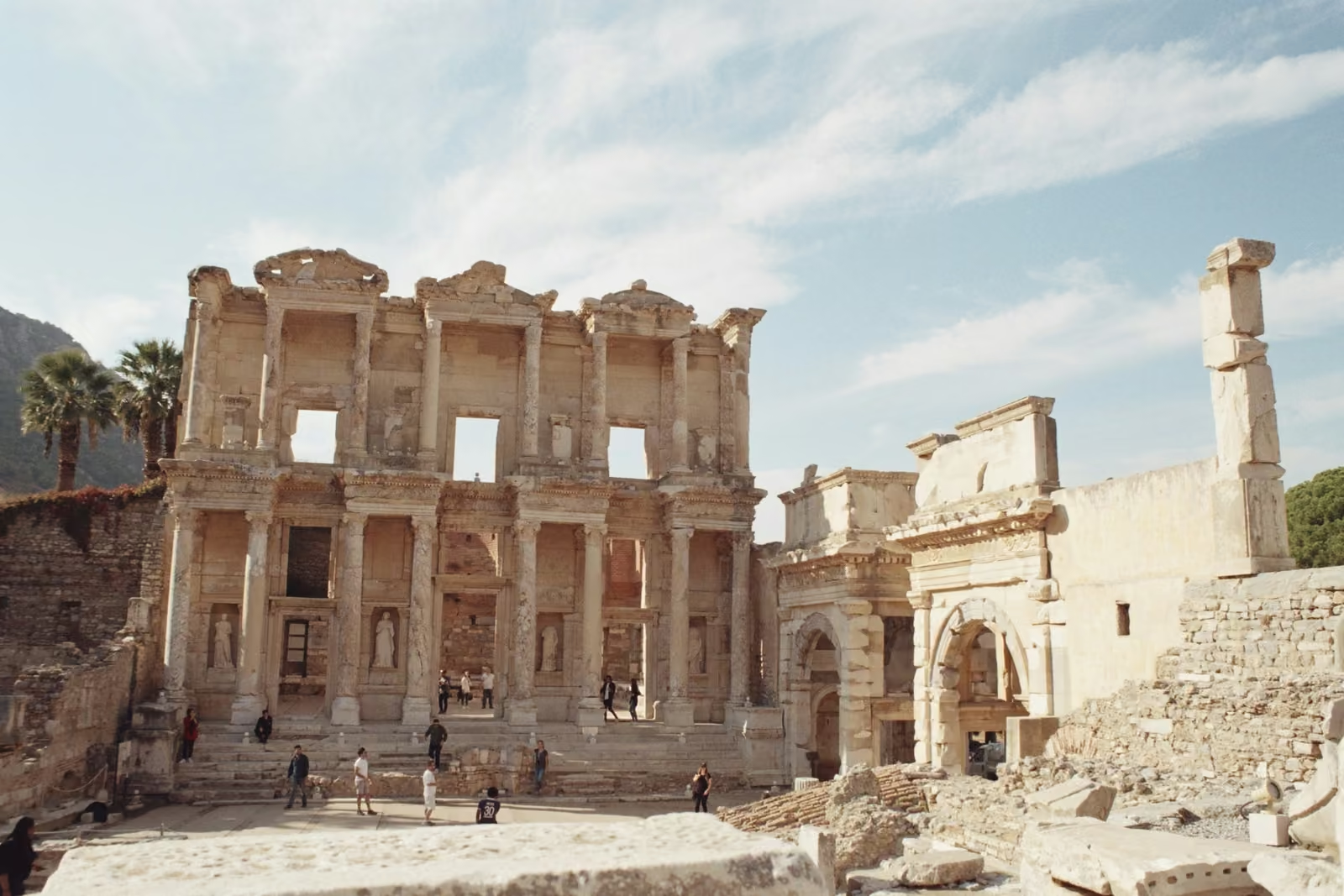
Devotional Acts 19: The Baptism of the Holy Spirit in Ephesus
Devotional Acts 19: The Baptism of the Holy Spirit in Ephesus Discover in Acts 19 the difference in baptism, how to respond when an audience rejects the gospel, the danger of spiritual opportunism, and the importance of sincere faith. Topics: Devotional, New Testament.
Devotional Acts 19: The Baptism of the Holy Spirit in Ephesus
Today’s devotional is found in the book of Acts, chapter 19, and this is what happened.
Synopsis: In this chapter, Paul goes to Ephesus after leaving Apollos in Corinth. Upon arriving there, he finds other disciples who had not yet received the Holy Spirit, as they had only been baptized unto repentance for their sins. They still needed to be baptized by accepting Jesus Christ as their Lord and Savior. Therefore, Paul lays his hands on them, and they finally receive the Holy Spirit by accepting Jesus as the Christ. Paul continued preaching, debating, and persuading the Jews in the synagogues of Ephesus. But despite many Jews converting, there were still many who mocked Jesus Christ. So Paul decided to stop preaching in the synagogues and preached to both Jews and Greeks in the lecture hall of Tyrannus for two years. During this period, God performed such extraordinary miracles through Paul that even handkerchiefs and aprons that had touched him were taken to the sick or demon-possessed, and the evil spirits left them. Because of Paul’s fame, the seven sons of Sceva, a Jewish chief priest, attempted to invoke the name of Jesus to perform miracles like Paul. But since they did not truly believe in Jesus, they were attacked by a demon-possessed man whom they tried to drive out, and they fled the house naked and wounded. Furthermore, a great riot broke out in Ephesus because Demetrius, a silversmith, warned the public about the danger of letting Paul and his companions spread their doctrine, as people would discredit the goddess Artemis and her temple. Consequently, his business selling silver models of the temple of Artemis would cease to be profitable and would destabilize the economy of Ephesus by exposing the falsehood of gods created by human hands. Out of this fear, the crowd dragged Gaius and Aristarchus (Paul’s traveling companions) into the theater to be judged. However, the city clerk stepped forward to quiet the crowd and explained why they should not shout and cause disturbances in the assembly, as they risked being charged with rioting while Gaius and Aristarchus had committed no crime or offense.
Observations
These were my observations.
- The difference between the baptism of repentance and the acceptance of Jesus Christ as Lord and Savior. When John the Baptist announced in Judea that the kingdom of God was near, he explained: “I baptize you with water for repentance. But after me comes one who is more powerful than I, whose sandals I am not worthy to carry. He will baptize you with the Holy Spirit and fire.” (Matthew 3:11 NIV). During that era, these two types of baptism existed because Jesus Christ had not yet fulfilled the prophecy (Isaiah 53:1–5 NIV). Therefore, John could only baptize people who repented of their sins as a sign that they would leave their bad conduct behind. So when Paul met the disciples who did not yet have the Holy Spirit, it all made sense. They had only been baptized by John the Baptist up to that point. Only in this chapter were they baptized with the Holy Spirit by Paul (Acts 19:1–5 NIV).
- The importance of not insisting on evangelism when the audience refuses to listen or accept the doctrine. This is a painful realization, but one we must always keep in mind when evangelizing. Jesus Christ warned us that not everyone would accept the gospel, and for that reason He instructed us to shake the dust off our feet as a testimony against those people (Luke 9:2–5 NIV). And that is exactly what Paul did in this chapter when some Jews in the synagogue insulted Jesus Christ and His doctrine. Simply put, after three months of attempts, he changed his strategy and withdrew with his companions to preach in the lecture hall of Tyrannus (Acts 19:8–9 NIV). The lesson is that we should not stop spreading the gospel even when we encounter people who stubbornly refuse to believe. For there are several reasons to continue spreading the gospel according to Jesus, which you can read about in this devotional.
- The importance of true faith and belief in Jesus Christ for miracles. The Ephesians venerated and worshipped the goddess Artemis and her temple to such a degree that a significant part of the economy depended on their idolatry (Acts 19:24–27 NIV). In contrast, Paul, a Christian baptized with the Holy Spirit, performed such wonderful miracles that his fame spread throughout the region. Because of this, there were envious people (Acts 17:5 NIV)—you can read more in this devotional—and others who wanted to do the same without believing in Jesus (Acts 19:13 NIV). Of the group that tried to do the same in the name of Jesus, they failed because they lacked faith (Acts 19:15–16 NIV), and Jesus always taught that with faith all things are possible (Matthew 17:20 NIV), but without it, nothing is possible. If we want good things and miracles to happen in our lives, we must always remember that faith precedes all extraordinary things and miracles.